Live Support
 Did you see us on the news?
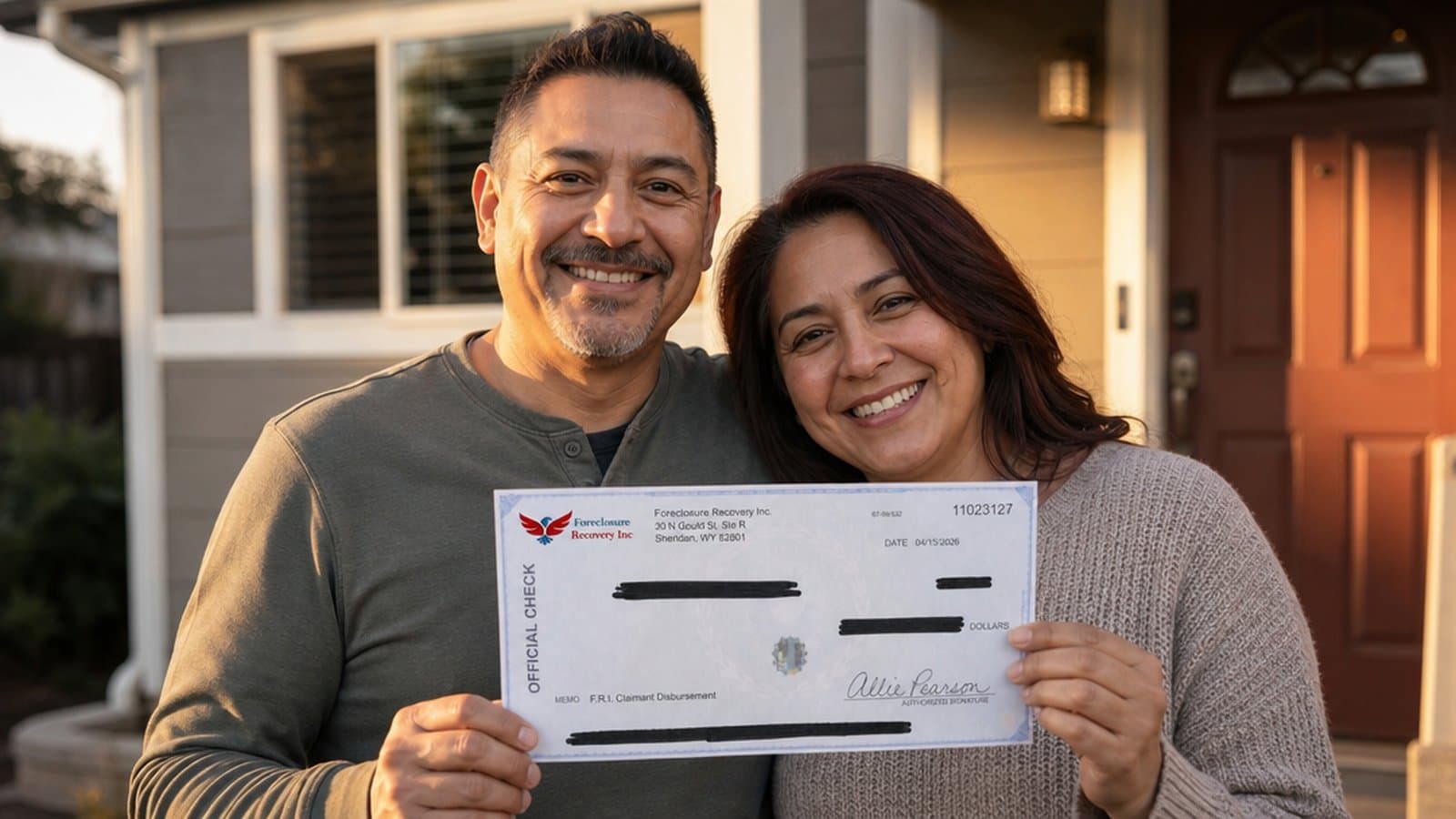
How We Helped the Martinez Family Recover $47,000 in Surplus Funds
The short answer
When a home sells at a foreclosure auction for more than the debt attached to it, the difference is called surplus funds, and it belongs to the former owner. The Martinez family lost their Texas home and never learned that about $47,000 in excess proceeds was sitting in a state account under their old name. We found the sale record, traced the family to an address two states away, verified their ownership history, and filed the claim with them. The funds reached them roughly four months after our first phone call.
What surplus funds actually are
A foreclosure sale is an auction. The lender or the taxing authority is owed a specific number, and the property sells for whatever a bidder is willing to pay that day. Sometimes the winning bid lands well above the debt. The extra money does not stay with the lender and it does not stay with the buyer. It belongs to the person who lost the home.
That money gets deposited into a holding account. The state holds the funds until somebody proves they have the right to them. There is no automatic payout. Nobody drives to your new address with a check. If the former owner never files a claim, the money sits, and after the claim window closes it can be absorbed permanently.
How the file started
Our data team pulls foreclosure sale records daily. The Martinez property showed a familiar shape. The debt on the property was roughly $118,000. The winning bid at auction was just under $170,000. Once fees and the payoff came out, about $47,000 was left over with no claimant attached to it.
A gap that size is not rare. It happens most often when a property has been owned for a long time, when the mortgage balance has been paid down, or when the local market moved faster than the debt did. The Martinez family had lived in that house for eleven years. They had equity. Losing the home did not erase it, it just moved it into an account they did not know existed.
Finding a family that had already moved twice
This is where most claims die. The address of record is the foreclosed property, and by definition nobody lives there anymore. Mail sent to that address goes nowhere. Any notice mailed after the sale went to a house the family had already vacated.
Our skip tracing found the family through a relative match and a phone number that had followed them across two moves. When we called, the first reaction was suspicion, which is the correct reaction. People who have been through a foreclosure get targeted by a lot of bad actors, and a stranger calling to say there is money waiting sounds exactly like the pitch they have been warned about.
So we did what we always do. We sent them the public sale record. We told them the amount, the sale date, and where the money was being held. We told them plainly that they could file the claim themselves at no cost to us, and we explained what our involvement would look like if they wanted help. They took three days to think about it and called back.
Building the claim
A surplus funds claim is a documentation exercise. The reviewing office is not trying to be difficult. It is trying to avoid paying the wrong person, because a wrong payment is close to impossible to unwind. Every requirement traces back to that fear.
What we assembled
- Certified copies of the sale record and the order confirming the sale
- The deed history showing the family held title at the time of the sale
- Government issued photo identification for both spouses
- A signed and notarized claim form naming both owners
- A title search showing no junior liens or judgments with a superior right to the money
- Proof of the current mailing address for disbursement
The title search matters more than people expect. Surplus funds do not go to the former owner automatically if somebody else has a recorded interest. A second mortgage, a tax lien, a recorded judgment, or a homeowners association assessment can all sit ahead of the owner in line. In this file the search came back clean, which is why the claim moved without a contest.
Why nobody told them
People assume the system notifies you. In most places a notice does go out, and it goes to the last known address, which is the property that was just sold. The letter arrives at an empty house, gets returned or thrown away, and the file is marked as noticed. Technically the requirement was met. Practically the family never heard a word.
Add to that the language on the notices themselves. They are written for lawyers. A single sheet of statutory citations does not read like a letter telling you that $47,000 is yours. Even when one reaches the right mailbox, plenty of people file it in a drawer.
The fee conversation
We work on contingency. If nothing is recovered, the claimant owes nothing. Our fee comes out of the recovery, and the agreement spells out the percentage before anybody signs. Fee limits vary by state, and in some places the maximum a recovery firm may charge is set by statute. We do not take a case where our fee would exceed what the state permits.
The honest framing we give every claimant is this: you can file without us. The forms are public. If you have the time, the deed history, a notary, and the patience to sit on hold, you should keep the whole amount. Most people call us because they do not have those things, or because they tried once and the filing came back rejected for a reason nobody explained.
The timeline
| Stage | Elapsed time |
|---|---|
| Sale record identified in our data | Day 0 |
| Family located and contacted | Day 9 |
| Agreement signed, document gathering begins | Day 14 |
| Title search returned clear | Day 31 |
| Claim filed with supporting exhibits | Day 38 |
| Review and verification period | Day 38 to Day 104 |
| Funds disbursed | Day 119 |
Four months is normal. We have seen claims clear in six weeks and we have seen clean claims take most of a year, usually because a reviewing office is short staffed or because a lien holder surfaces late and the file has to be re-examined. Anybody who promises a specific turnaround is guessing.
What to do if you think you are owed surplus funds
- 1Find your sale date and the final sale price. Both are part of the public record.
- 2Compare the sale price to the total debt on the property, including fees and interest.
- 3Check whether a claim deadline applies where the property sat. Windows commonly run from one to five years from the sale, and once the window closes the money is usually gone.
- 4Pull a title search before you file, so a surprise lien does not sink the claim after you have waited months.
- 5File with complete documentation the first time. A rejected filing costs weeks and sometimes burns the deadline.
If you would rather have someone handle it, we are reachable at (888) 545-8007. We will tell you if we think there is nothing there, and we will tell you if you are better off filing on your own.
Names and identifying details in this account have been changed to protect client privacy. Every claim is different, and the outcome of one recovery does not predict the outcome of another. Foreclosure Recovery Inc. is an asset recovery administration service and does not provide legal or tax advice.
Frequently asked questions
What are foreclosure surplus funds?
Surplus funds are the money left over when a property sells at a foreclosure auction for more than the total debt owed on it. After the lender, taxes, and sale costs are paid, the remainder belongs to the former owner. It is also called excess proceeds or overbid funds.
How do I know if I have unclaimed foreclosure money?
Compare the final auction sale price of your former property against the total payoff amount on the debt. Both figures are part of the public record. If the sale price was higher, surplus funds were probably created. Foreclosure Recovery Inc. can run that check for you at (888) 545-8007.
How long do I have to claim excess proceeds after a foreclosure?
Claim windows are set by statute and vary widely, commonly running from one year to five years after the sale date. Once the window closes the funds are typically absorbed and the former owner loses the right to claim them, so timing matters more than almost anything else.
Do I need a lawyer to claim surplus funds?
Not always. Some places allow an owner or an authorized recovery firm to file directly, while others require an attorney to appear on the claim. The requirement depends on where the property sold and on whether anyone contests the claim.
What does a surplus funds recovery agent charge?
Reputable recovery firms work on contingency, meaning the fee comes out of the recovery and nothing is owed if nothing is recovered. Several states cap the fee by statute. Ask for the percentage in writing before you sign anything, and be careful with anyone requesting money up front.
Think there may be surplus funds in your name?
We check the sale record at no cost and we will tell you plainly if there is nothing there. No fee is owed unless funds are recovered.
(888) 545-8007